Chongqing
As a famous mountain city and river city in southwest China, Chongqing, known as the “8D Magic City”, is a charming city that combines unique geographical features, profound cultural heritage, fiery food, and warm folk customs. Benefiting from the 240-hour visa-free transit policy (extended from 144 hours) for 54 countries and the 30-day visa-free policy for citizens of 48 countries, it has become one of the most popular destinations for international tourists to visit China, attracting visitors from all over the world with its three-dimensional urban landscape and strong market fireworks. This guide will help you explore Chongqing easily, covering must-visit attractions, delicious food, practical tips, and convenient services, making your trip pleasant and memorable.
Must-Visit Attractions: Chongqing’s attractions are closely linked to its mountain and river terrain, showing a unique three-dimensional charm that you can’t experience in other cities. Hongya Cave, a landmark of Chongqing, is an 11-story cascading architectural marvel. When night falls, it is lit up like a golden lantern, integrating with the night view of the Jialing River, which is like a scene from a fairy tale. It is recommended to avoid crowds by visiting the nearby Daijia Alley for an unobstructed view of this beautiful scenery.
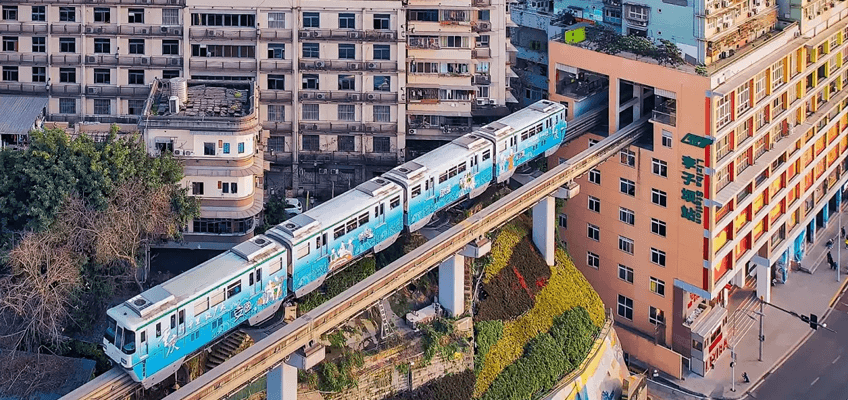
The Liziba Light Rail Station is a symbol of Chongqing’s “3D transportation”. You can watch the light rail glide through residential buildings, a unique scene that has become a popular check-in spot for international tourists. The Yangtze River Cableway, known as the “air bus” of Chongqing, takes you to soar above the city in glass cabins, overlooking the winding Yangtze and Jialing Rivers, as well as the contrast between old streets and modern skyscrapers. Riding it at sunrise or sunset will bring you a more amazing experience.
Other notable attractions include Ciqikou Ancient Town, a 1,000-year-old port town with cobblestone streets, Qing Dynasty teahouses and snack stalls, where you can taste local snacks and buy characteristic souvenirs like Chen Ma Hua (Chen’s fried dough twists); Dazu Rock Carvings, a UNESCO World Heritage Site with over 1,000 years of history, featuring intricate and lifelike Buddhist, Taoist and Confucian sculptures; and Wulong Karst National Geology Park, a day-trip destination with stunning limestone formations like the Three Natural Bridges, showcasing the magical charm of nature. Besides, Liberation Monument, standing in the center of Jiefangbei Pedestrian Street, is a symbol of Chongqing’s modern history and culture, where you can enjoy shopping, dining and the bustling urban atmosphere. You can also visit Eling No.2 Factory Cultural and Creative Park, a renovated old factory that combines industrial heritage with creative vitality, perfect for taking photos and experiencing local cultural creativity.
Delicious Local Food: Chongqing’s cuisine is famous for its spicy and numbing flavor, which is closely related to its humid climate. Chongqing Hotpot, the most representative food, has been included in the national intangible cultural heritage. Its red butter broth is bright and fragrant, and the “three classic ingredients” — tripe, duck intestines, and yellow throat — are the soul of hotpot, which need to be blanched for a short time following the “seven up and eight down” rule to taste crispy and tender. If you can’t stand too much spiciness, you can choose the “mandarin duck pot” (half spicy and half clear soup) to enjoy the deliciousness without being overwhelmed. Besides hotpot, you must try other local delicacies: Chongqing Xiaomian (spicy noodle soup), a daily staple for locals with chewy noodles and rich sauce; Youcha (salty rice porridge with crispy dough), a classic breakfast that is warm and flavorful; and Chaoshou (spicy wonton soup), which is tender and spicy, leaving a deep impression.






Your attention and support are very important to us
Follow us to experience the beauty of China together
Hello China © 2026 | All rights reserved
